How to Promote a Conference: 7 Strategies to Fill Seats
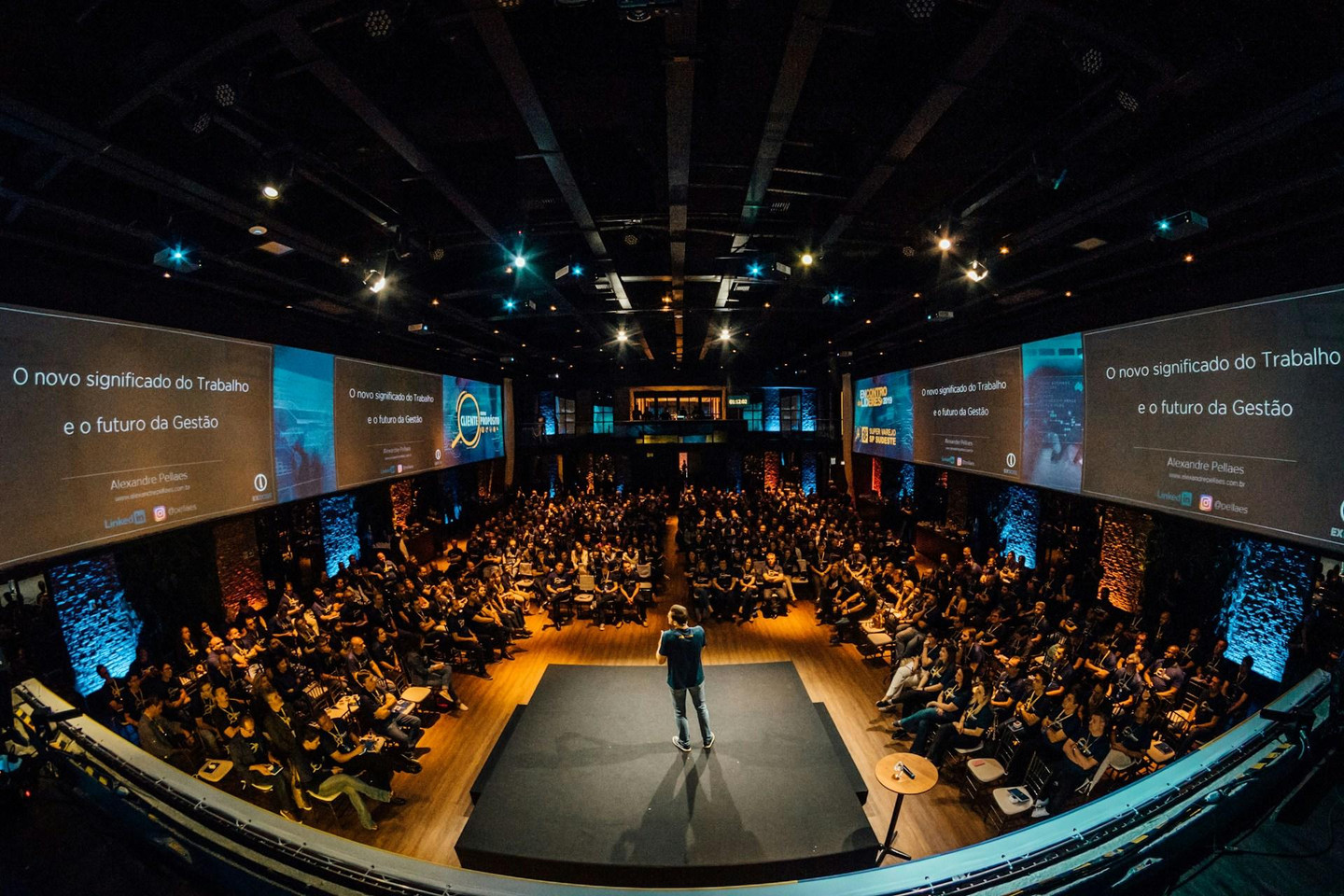
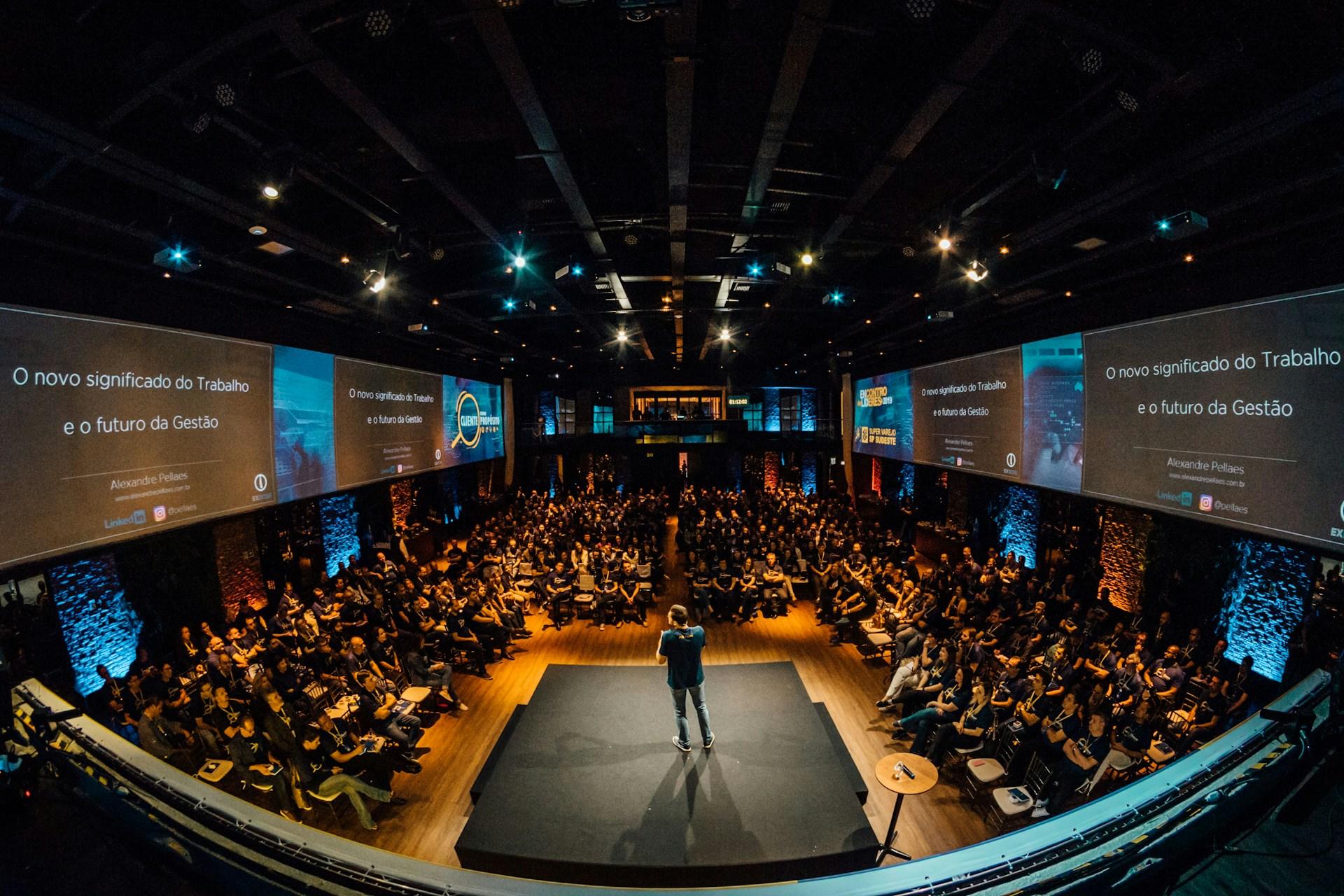
Promoting a conference means reaching the right audience across your owned channels, borrowing reach from people who already have their attention, and converting that interest into registrations.
Most guides stop at the registration page. This one runs through to the moment delegates walk in, because the signage, the lanyards and the satchels are promotion too – they're what makes an event shareable and what turns attendees into next year's word of mouth.
Promotion runs in three phases.
Pre-event starts nine to twelve months out with a save-the-date and runs hardest in the final six weeks.
During the event, live social and on-site branding drive last-minute registrations and generate the content you'll need later.
Post-event starts the day it ends, turning highlights and testimonials into anticipation for next year.
Here are seven strategies for filling seats.
#1 - Define and segment your target audience before promoting
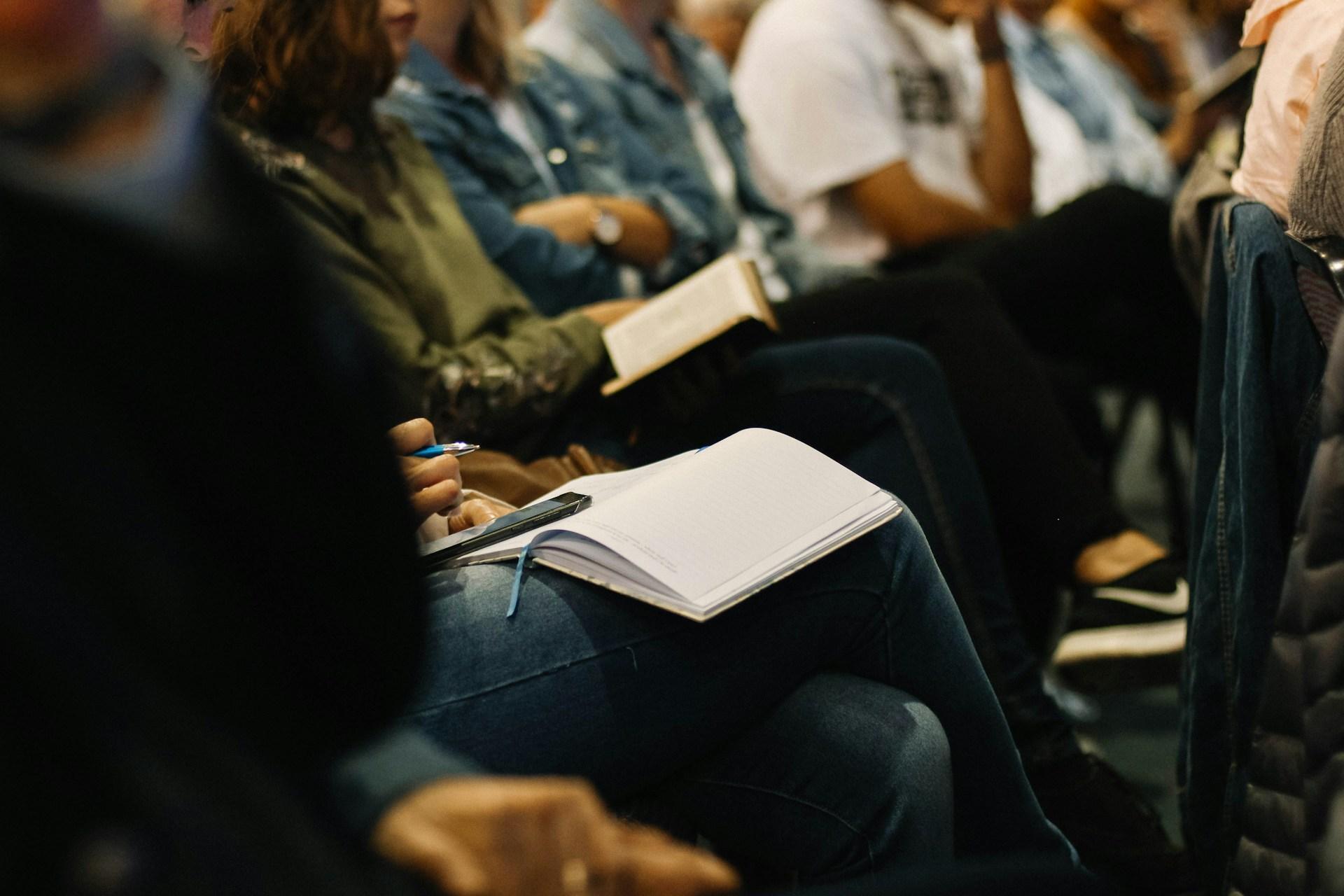
Define two to four attendee personas first, then segment your list around them – because segmentation decides every channel choice that follows.
Start with who the conference is genuinely for. Your marketing approach should set a clear value proposition for each segment instead of one message for everyone. Most events have a handful of distinct groups rather than one homogeneous audience:
- Decision-makers with budget authority, who need to justify the spend
- Practitioners attending for skills and content
- Past attendees, who already know the value and book early
- First-timers, who need convincing and decide late
Keep personas broad enough that you can write to each one without splitting your list into fragments too small to be worth the effort. Involving members early in the event planning stage can help maximise attendance.
This matters more than it sounds, because segmentation drives everything downstream. Asking for surveys or feedback on the event topic can streamline planning and help you connect with your target audience effectively, based around real audience interests and useful industry insights.
It determines which email sequence someone gets, which platform you reach them on, and what you actually say. There's evidence for timing it differently too: Maritz analysed more than 360,000 registrations and found 75% of first-time attendees registered late, against 47% of repeat attendees.
Goal-setting and KPIs sit outside the scope of this guide, but agree what a successful registration number looks like before you start spending against it.
#2 - Build your conference brand, event website and registration page
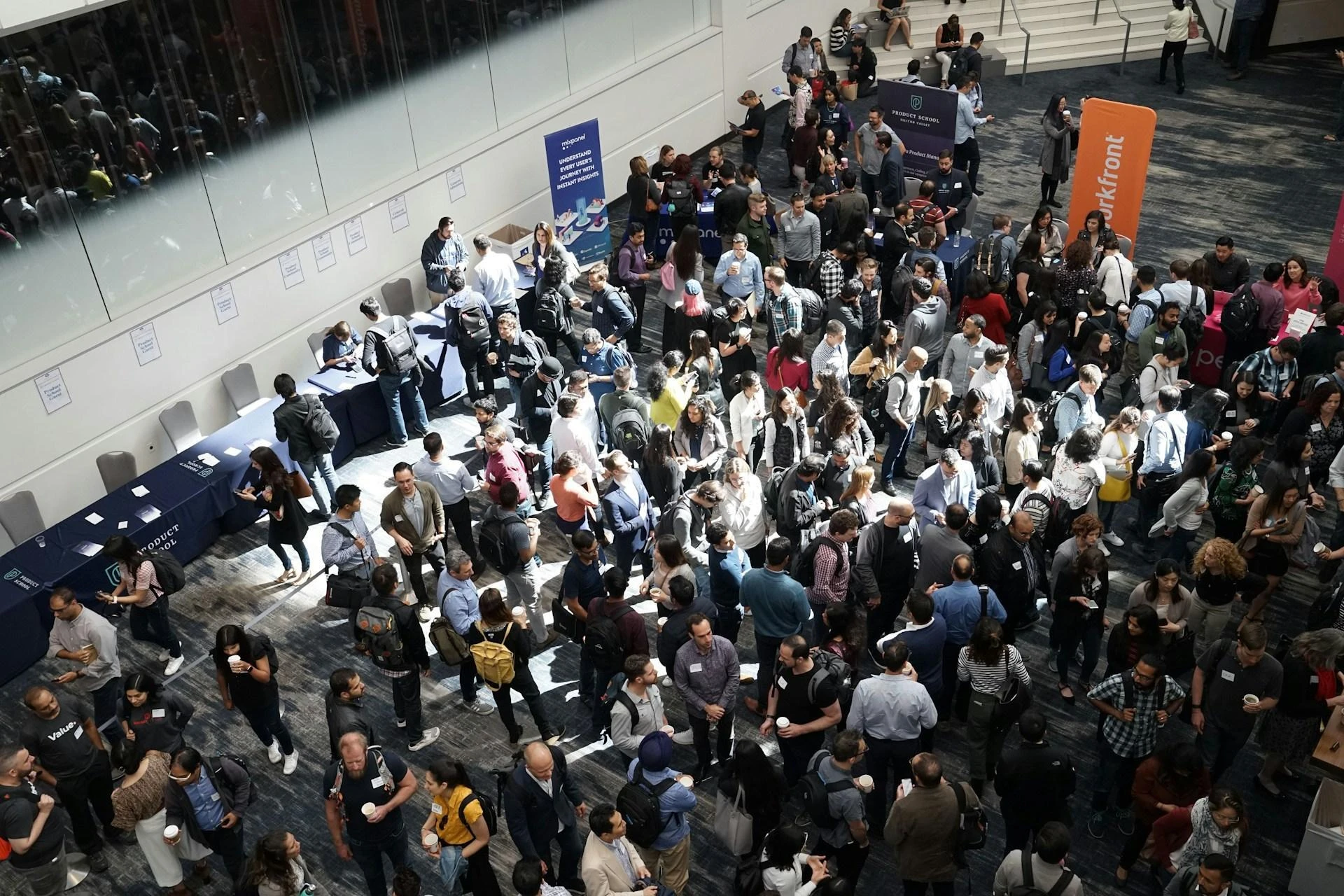
Your event website is the hub every other channel points to, and a consistent event brand is what makes each of those channels recognisable as the same event.
Everything below – email, social, speaker promotion, paid ads – exists to send someone to one page. If that page is unclear or the identity is inconsistent, the rest leaks.
Create a dedicated event website and registration page
A dedicated event site should answer the obvious questions immediately: date, location, agenda, keynote speakers, guest speakers, networking events and sponsors, with a clearly visible registration page.
A few things worth getting right:
- Make registration easy to find. It should be visible without scrolling and repeated further down the page.
- Keep the registration flow simple. Ask for what you need, and explain why you're asking for anything that isn't obvious.
- Design for mobile first. A large share of your traffic will arrive from a phone, usually from a social post or an email.
- Apply basic SEO. Use the conference name, year and location in your page titles and headings, incorporating relevant keywords that potential attendees are actively searching for so the event surfaces when people search for it by name.
Different event types may need slightly different landing-page messaging, especially for a virtual conference or virtual event where registration and access details must be clearer for anyone joining the event online.
The agenda and speaker list are the two pages people return to before deciding, so keep them current to help with attracting attendees, and keep event highlights and event details up to date on the event website. A speaker announcement is a reason to send an email; an out-of-date agenda is a reason to hesitate.
Build a recognisable event brand
A consistent name, logo, colour palette and set of signature graphics used across every touchpoint makes your conference instantly identifiable.
That means using the same identity whether you are promoting a next event or a one-off conference: on your website, in your email headers, across social, on the delegate satchel and on the signage at the door. Someone who saw a LinkedIn post in March should recognise the banner they walk past in October.
For recurring conferences, this compounds. An annual event with a stable identity accumulates recognition year on year, making each new campaign cheaper to run than the last and giving you a stronger base for future events. Changing your look every year throws that away.
Carrying the identity into physical touchpoints is part of the same job – branded apparel for your team and volunteers is often the most visible version of it, since staff are photographed all day, and it helps make a unique conference recognisable wherever people encounter it.
#3 - Promote your conference through email marketing
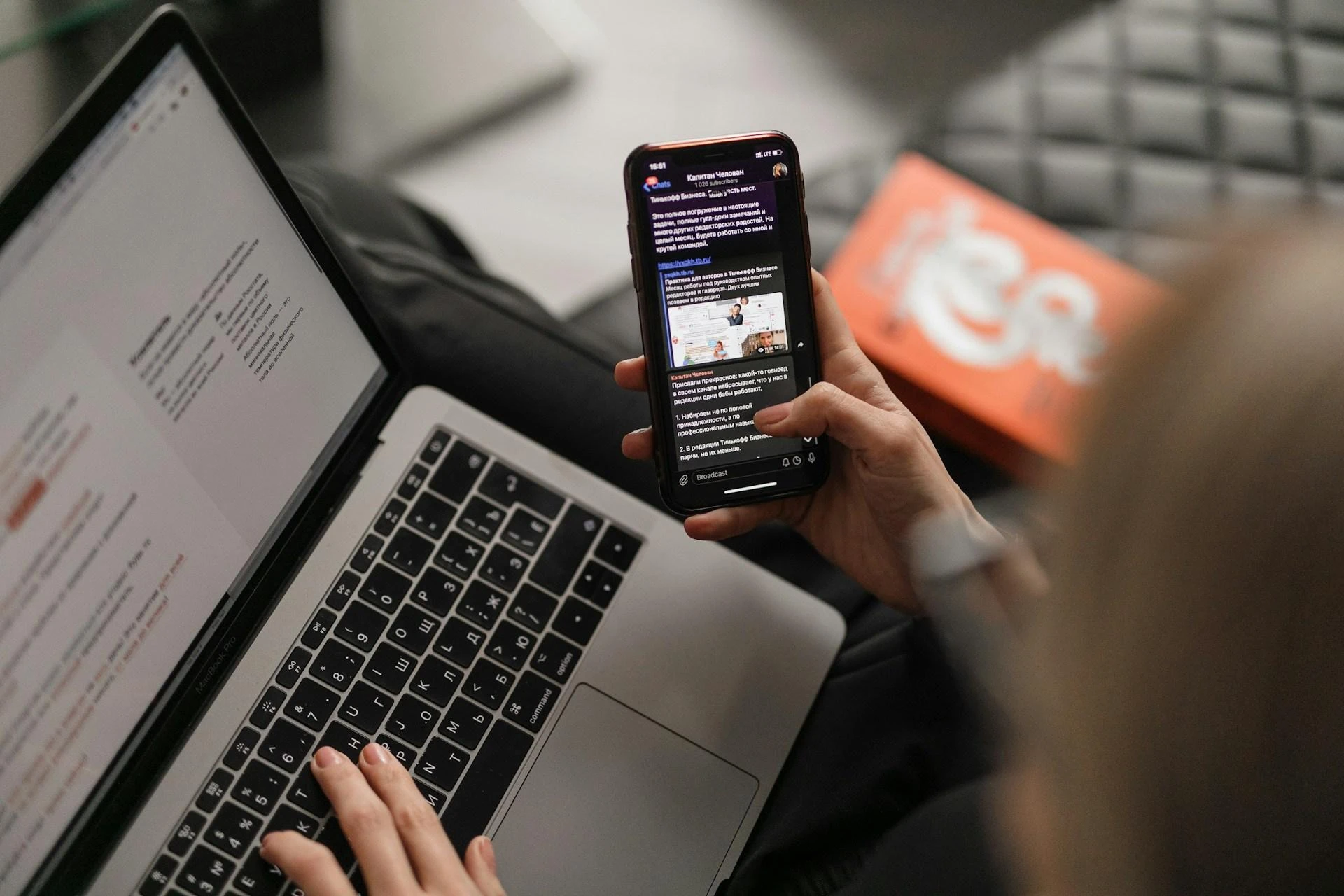
Segmented email consistently outperforms mass email, and for most Australian conferences it's the single strongest channel available, with well-run email campaigns able to drive around 45% of event ticket sales as part of broader event marketing and targeted marketing efforts.
The numbers back that up. AuSAE surveyed Australasian associations on their digital marketing and found direct email used by 91% and rated effective by 90% – ahead of every other channel including LinkedIn.
Use segmentation, timing, and proof points to sell tickets more efficiently rather than sending the same message to everyone.
The three segments to build sequences for
- Past attendees. They already know what they're getting. Soft-sell with highlights from last year's event and what's new this time. Previous attendees often respond well to content from previous events. They also tend to book early, so reach them early.
- Past registrants who didn't attend. Something got in the way. Address what they missed and give them a reason it'll be different – a session format, a speaker, a schedule change. Follow-up emails can reconnect with prospective attendees who registered before but missed year's event.
- Interested people who haven't registered. They've visited the site or signed up for updates. Combine proof from previous years with genuinely new content, especially for potential attendees who need proof from past editions before committing.
That segmentation is standard practice and it's what BESydney recommends to organisers.
But pair it with the registration timing above and you get something more useful than three versions of the same message: a reason to run those segments on different schedules.
Hit past attendees early, when they're receptive. Save your heaviest push on cold prospects for the final six weeks, when they're finally paying attention.
Making the emails work
- Every send needs genuine news. A new keynote speaker, the agenda going live, event updates, early bird closing. "Register now" three times isn't a campaign.
- One clear call to action per email. Two competing buttons halve the click-through on both. Personalised email content usually improves response and helps boost attendance.
- Write the subject line last. It's the only part most of your list will read.
- Build the list continuously. A sign-up form on the event site captures people who aren't ready to register but are interested – and that's your warmest segment next year, and people you can promote your event to again for future events or the next event.
#4 - Build buzz on social media before the conference

A single consistent event hashtag plus content matched to the right social media channels for each audience segment is what turns social from broadcasting into buzz.
Create and Promote Your Event Hashtag
Your event hashtag gives people one easy way to follow updates, join the conversation, and share their own posts before, during, and after the conference. Keep it short, memorable, and directly tied to your event name or theme.
Use it everywhere your event appears: registration pages, speaker graphics, email campaigns, event signage, slides, and every conference-related post. The more consistently people see it, the more likely they are to use it themselves. Consistent use across your social media pages also helps boost engagement.
Make sure your speakers, sponsors, exhibitors, and team members know the hashtag early so they can include it in their own content. That shared visibility can help the tag gain traction faster and widen your reach beyond your own audience.
Tailor Content to Each Platform
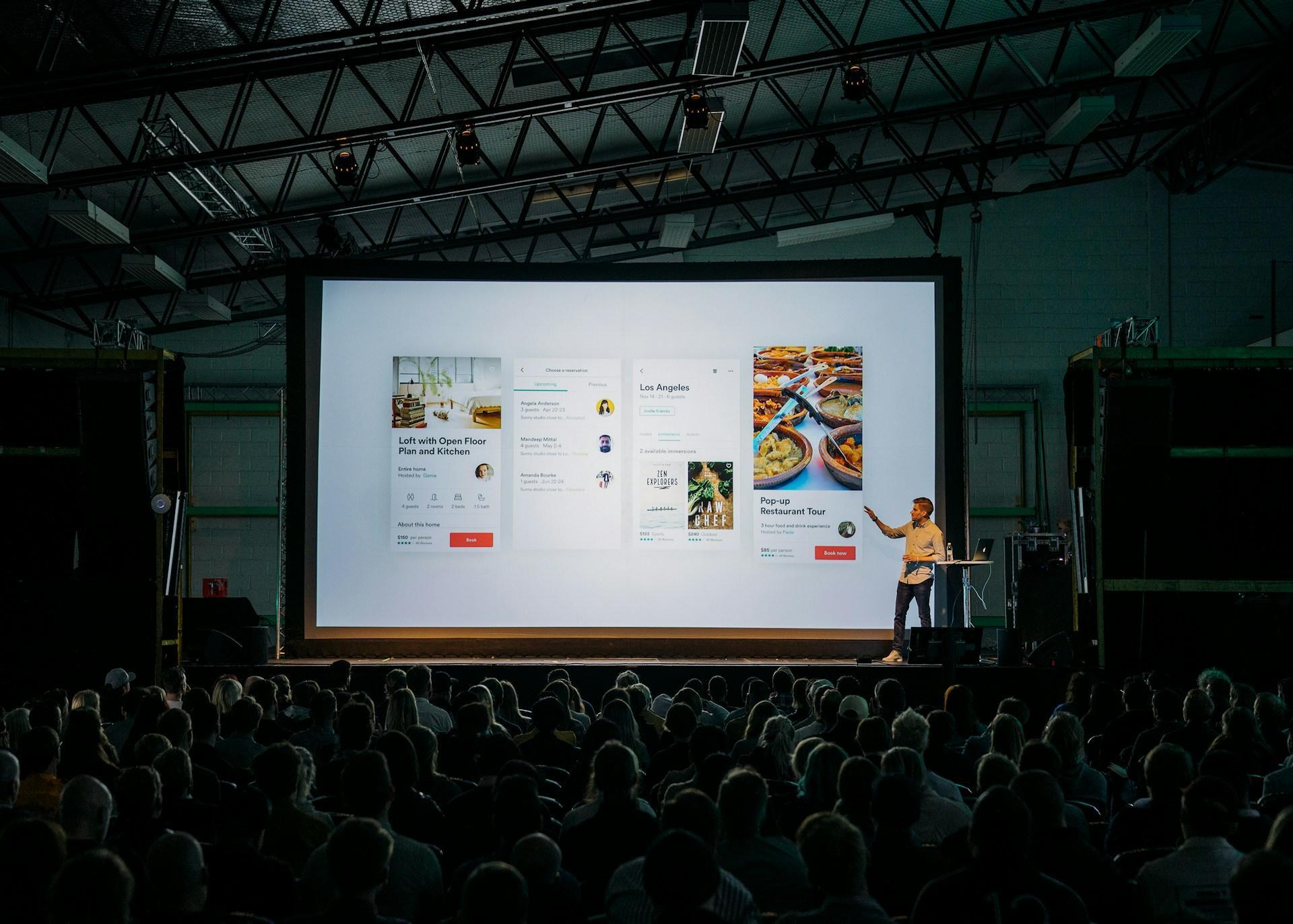
Instead of posting the same message everywhere, choose the marketing channels that best reach specific audiences and adapt your content to fit how people use each one. A format that works well on LinkedIn may not perform the same way on Instagram or X.
For example, LinkedIn is usually best for professional thought leadership, speaker highlights, and agenda updates. Instagram works better for visual previews, behind-the-scenes content, and short videos. X can be useful for quick reminders, live updates, and real-time interaction.
The goal is not just visibility, but relevance. When your message matches the style and expectations of the platform, people are more likely to stop, pay attention, and take action.
Keep the Momentum Going Before, During, and After the Event
Conference promotion on social should not start a week before the event and end when the doors open. You need a plan that builds interest early, maintains attention during the lead-up, and extends the value of the event once it is over. You also need to post multiple times across your social media to capture attention, not just publish once.
Before the event, share registration reminders, speaker announcements, session teasers, sponsor spotlights, and attendee benefits.
During the event, post live updates, photos, short clips, quotes, and audience reactions. After the event, repurpose highlights, testimonials, and key takeaways to keep the event visible and support future promotion.
This longer timeline helps your event stay active in front of your audience and makes better use of the content you are already creating. Paid promotion can also extend the reach of your best-performing updates across different various social media platforms.
Create one hashtag and use it everywhere
Combine the conference name and year into something short and unmistakable. Use it on every post from announcement onwards, put it on your signage, print it on the delegate satchel, and ask speakers and sponsors to use it.
The point is that it becomes searchable – attendees find each other, and you get a feed of user-generated content you can reuse.
Match the content to the platform
- LinkedIn for speaker announcements, session content and anything aimed at decision-makers. Australasian associations rate unpaid LinkedIn at 82% effective and 89% use it, making it the strongest organic B2B channel available.
- Instagram for visuals – venue shots, speaker portraits, behind-the-scenes stories as the event gets closer.
- Facebook for an event page, which handles reminders and lets attendees see who else is going.
- TikTok for short highlight clips, but only where your audience genuinely is. AuSAE found just 4% of Australasian associations use it.
Content that actually generates engagement
Behind-the-scenes material consistently outperforms polished promotion because it feels like more engaging content. Venue walkthroughs, the team building the run sheet, a speaker recording their intro.
Speaker teasers work particularly well because they give the speaker something to share. Event highlights can also be repurposed into short clips to generate excitement before the conference.
Social contests and giveaways – like, share and tag to enter – extend reach beyond your existing followers, and social media contests can help you reach a broader audience. A branded prize pack works well here because it previews what attendees receive.
A note on paid
Paid social, search, relevant media outlets, and Google Ads let you reach lookalike audiences you don't already have access to. Remarketing is the higher-value play: re-reaching people who visited your registration page and didn't complete it, including potential attendees who visited but did not register.
Worth knowing that 39% of Australasian associations run no paid media at all, so if your budget is zero, you're in the majority and organic plus email is a legitimate plan.
#5 - Expand your reach with speakers, sponsors, influencers and PR

Earned reach means borrowing audiences from people who already have the attention of your target market.
Your own list has a ceiling. These four channels don't. Promoting a conference effectively requires combining borrowed reach with your own channels.
Build a real speaker promotion kit
If you have speakers, sponsors, or partners, make it embarrassingly easy for them to share. Speaker-driven marketing works because guest speakers bring their own networks and credibility. That means giving them swipe copy, images, trackable links, and a simple posting schedule instead of vague "please share this" emails.
At minimum, give them:
- two social post options
- one short email blurb
- one longer newsletter version
- branded graphics in the right sizes
- a unique tracking link or UTM
The easier you make participation, the more likely it happens.
Get on relevant podcasts and niche media
Podcasts are one of the best trust-building channels if your audience is specialised.
Don't pitch your event immediately. Pitch an idea that is useful, timely, or opinionated. Then mention the conference naturally with a call to action.
This works especially well if your event has a strong angle, original data, or a known speaker lineup.
Partner with adjacent communities
Look for newsletters, associations, Slack groups, LinkedIn groups, and creators who already serve the same audience.
The best partners are not generic "large audiences." They're trusted organisers, educators, and thought leaders around industry conferences who influence the exact people you want in the room.
Partnerships can include:
- list swaps
- co-hosted webinars
- discount codes for members
- newsletter placements
- content collaborations
If your audience already gathers somewhere, your job is to show up there with a compelling reason to care.
Create a landing page worth sharing
If all promotion points to a weak page, your reach leaks.
Your page should quickly answer:
- who it's for
- what they'll learn
- why now
- who the event is for
- where it is
- how to register
Add social proof, agenda highlights, FAQs, and clear CTAs. If relevant, feature venues that support recording, interviews, or live content well, since that can matter for industry conferences with educational programming.
A strong event page also helps sponsors, speakers, and partners promote you without rewriting your positioning from scratch.
Give speakers and sponsors ready-to-use promotion kits
Everyone says to provide a promotion kit. Fewer people explain how to get it used.
The mechanism that works is bundling the promotional ask into the dated obligations checklist speakers already have to complete – the one with their bio, headshot and slide deck on it. Sharing stops being a favour you request by email and becomes item four on a form with a deadline.
The kit itself should be genuinely ready to use: social graphics sized per platform, pre-written post copy, an email template, and speaker headshots already branded with the event identity. If someone has to make anything, they won't.
Make sponsor cross-promotion a two-way deal
Sponsorship agreements should include promotional obligations on both sides. The version that works best is a unique discount code per sponsor – it gives them something that makes them look generous to their own customers, and it lets you measure exactly what each partner delivered.
Attaching a countable threshold with a reward at the top turns it from a request into a target.
Partner with industry voices
An influencer or respected thought leader in your sector can put the event in front of an audience you'd never reach. Some will attend and post for a complimentary ticket; others expect payment, and you should ask upfront.
Neither outcome is guaranteed, so treat it as an experiment rather than a line in your registration forecast.
Send a press release to industry media
A concise release covering the five Ws – who, what, when, where, why – with a quote from your conference chair, sent to relevant trade publications and industry associations, can generate coverage you didn't pay for.
Coverage isn't promised, and Australian business events trade press reaches the supply side more than your delegates, so treat it as credibility building rather than a registration driver.
Don't overlook your state convention bureau
This one is genuinely underused. Australian convention bureaux publish marketing assets that most organisers never ask for.
Business Events Cairns & Great Barrier Reef offers a media library of images and footage, curated itineraries, and delegate special offers from local operators that you can drop straight into your own emails and event site.
Experience Gold Coast publishes downloadable eDM templates, postcards and a copy deck written for conference websites.
Business Events Perth runs a Destination Sponsorship programme that explicitly funds the "creation of marketing assets and promotional material to maximise delegate registrations".
BESydney provides an organiser toolkit and delegate boosting support.
Ring the bureau for your destination and ask what's currently available. It costs nothing and most organisers never do it, even though these free bureau assets give event organisers extra support to strengthen their marketing strategies.
#6 - Create urgency with early bird tickets and incentives
Time-limited pricing gives people a reason to register today instead of eventually – and that urgency is mainly there to boost ticket sales – but where you set the deadline matters more than the discount.
The standard tactics, used as part of broader marketing campaigns rather than instead of them:
- Early bird tickets or early bird discounts with a clearly published closing date, ideally in tiers so you get more than one deadline to promote.
- Group and bundle discounts, which turn one registration into three or four and make attending easier to justify internally.
- Short flash sales – a 48-hour window creates urgency without permanently discounting your ticket.
- Incentives rather than discounts – early registrants get access to an exclusive session, a seat at a limited workshop, or entry into a prize draw.
Each of these does double duty. The deadline itself is a reason to send an email and post on social, which is why a conference with three pricing tiers has three legitimate campaign moments rather than one, and those deadlines also help generate excitement as well as sell tickets.
Where to set the deadline
Here's the part most organisers get wrong, and there's data on it.
Maritz's analysis, as reported by PCMA, found roughly 45% of attendees register with under four weeks to go, and more than a quarter wait until the final fortnight.
It also found something counter-intuitive about spend: attendees who registered in the final four weeks spent $59 more on add-ons than those booking 90 or more days out, and the optimal window was 31 to 60 days, where attendees spent around $370 a head beyond the registration fee.
Those booking 120-plus days out spent nearly $100 less, partly because half the add-ons hadn't been finalised when they committed.
PCMA's summary of the finding is blunt: "not only are these time-based discounts not driving the behaviours you want, but you might also be giving away money to the very people who would attend your show regardless."
That's US trade show data, so treat it as directional. But the practical implication holds: if most people decide inside four weeks, an early bird deadline four months out is discounting people who were coming anyway. Six to eight weeks out is a more defensible place for your final deadline.
One enforcement detail worth copying: price on the date payment is received, not the date the registration form arrives. It closes the obvious loophole.
#7 - Reinforce your conference brand with signage, banners and delegate packs
Branded physical items promote your conference in two ways – they make the event shareable while it's happening, and they turn attendees into walking advertising for months afterwards.
This is the half of conference promotion that most guides skip entirely, which is odd, because it's the part that generates the content your next campaign runs on.
Signage that creates photo moments, not just wayfinding
On-site signage and banners do the obvious job of telling people where to go. The promotional job is different: it gives people something worth photographing.
A well-designed media wall or branded backdrop with your hashtag on it turns every attendee with a phone into a distribution channel.
Pull-up banners at registration, a branded entry arch, teardrop flags outside the venue – each one is a surface that either carries your identity into someone's photo or doesn't.
Two things make the difference between signage that gets photographed and signage that doesn't. Put the hashtag on it, large enough to read in a photo taken from three metres away.
And light it properly – media wall fabric is usually matte and light-absorbing specifically so it photographs well, which matters more than the price difference if the wall's real job is generating social content.
Lanyards are your highest-visibility branded item
Every attendee wears one, all day, for the length of the conference. Nothing else in your kit gets that much continuous exposure.
Lanyards appear in every photo taken at the event, including the ones attendees post themselves. They're also the item people are most likely to keep wearing at the airport on the way home. If you're economising somewhere, don't economise here.
Delegate packs extend reach long after the event
A satchel of branded items is the only part of your conference that leaves the venue and keeps working.
- Conference bags and totes – the satchel itself is the highest-mileage item in the pack, reused for groceries, gym kit and other events for years.
- Drinkware – reusable bottles and cups get daily use, which makes them the highest impression-generating item you can include.
- Notebooks – used during sessions and kept afterward, and one of the few items people actively want.
- Pens – the most-used item in any pack, and the one most likely to be passed on to someone else.
The Australian evidence for this is reasonable. APPA's 2025-26 research surveyed 399 Australian and New Zealand recipients of promotional products and found 81% could recall the brand on merchandise they'd received, 84% told someone else about the brand, and 66% visited its website or social channels.
APPA is an industry body and the sample is modest, so read it as directional – but it's current and it's local, which is better than most figures in this space.
For a conference, that word-of-mouth number is the interesting one. A satchel that gets reused is a conversation about your event happening without you.
Use the merchandise as a pre-event teaser
Here's the tactic almost nobody uses: reveal the merchandise before the event.
Post the lanyard design. Show the satchel. Photograph the pack laid out and announce what's in it. It gives you genuine social content in the final weeks – exactly when you need reasons to post – and it gives registered attendees something to look forward to and share.
It also works as a scarcity lever without discounting anything. "First 100 registrations get the limited edition colourway" is a real incentive that costs you nothing extra.
One practical note: this only works if the stock actually exists. Merchandise runs on production lead times measured in weeks, not the days your signage takes, so the decision to tease it needs making early enough that there's something to photograph.
Keep the physical and digital brand identical
The colours on your banner should match the colours on your website. The logo on the satchel should be the logo in your email header.
This sounds obvious, and it's routinely got wrong, usually because the merchandise is ordered by someone different from whoever built the website, working from a different file.
Give every supplier the same brand guidelines and the same vector artwork, and check the proofs against your site rather than against each other.
Conference promotion FAQs
Start nine to twelve months out. Pre-event promotion begins with a save-the-date and holding page, opens registration around six months out, and peaks in the final six weeks – roughly 45% of registrations arrive inside the last four weeks.
During the event, live posting drives late registrations. Post-event promotion starts immediately afterwards, seeding next year.
Lean on free channels: while offline options like direct mail campaigns can also work when budgets allow, promoting events on organic social with a consistent hashtag, email to your existing list, speaker and sponsor cross-promotion, a press release to industry media, and your state convention bureau's free marketing assets.
Nearly four in ten Australasian associations run no paid media at all.
If you do have a small budget, put it into remarketing – re-reaching people who already visited your registration page converts better than reaching new ones. Direct mail campaigns have a 4% response rate, and oversized envelopes tend to perform best at 5%.
Paid social and search reach lookalike audiences beyond your own list, which matters most for first-time attendees. Remarketing does the higher-value job: re-reaching people who visited your registration page and didn't finish.
Both complement organic rather than replacing it – your owned email list will almost always outperform them per dollar.
Yes, and it's the cheapest promotion you'll do. An alumni referral program can turn past attendees into promoters for future events.
Share recap videos, photo highlights, and video testimonials from last year's event while the event is fresh, which both proves value to people who didn't attend and builds anticipation for the next event. Keep your email list warm with updates rather than going silent for eleven months.
Track registrations over time against your target, and to measure the event's success, check whether each segment responded to the value proposition you marketed; also watch email open and click rates by segment, website traffic and which sources it comes from, social engagement and hashtag use, and cost per registration for anything paid, with conference attendance as the headline outcome.
The registration curve is the most useful of these – if it's flat six weeks out, your final push needs to be bigger than planned.
If you're putting a conference kit together, you can browse Brand Surge's event and conference merchandise range – lanyards, signage, satchels, drinkware and everything else that carries your event identity out of the room.
Ready to Fill Every Seat at Your Next Conference?
Filling seats comes down to reaching the right audience across your own channels, borrowing reach from people who already have it, and giving delegates something worth sharing once they walk in the door.
If you are putting a delegate pack, signage, or lanyards together for your event, our team here at Brand Surge can help you get the branding consistent across every touchpoint – from the registration page through to what attendees carry out the door.
Looking for inspo?
Our blog shares practical tips and real examples to help you choose merch people actually keep.
23rd Sep 2026
Best Promotional Items for Trade Shows That Generate Leads
Read more about Best Promotional Items for Trade Shows That Generate Leads
23rd Sep 2026
Corporate Christmas Gift Ideas for Clients and Staff
Read more about Corporate Christmas Gift Ideas for Clients and Staff
12th Aug 2026