Best Promotional Items for Small Businesses in Australia
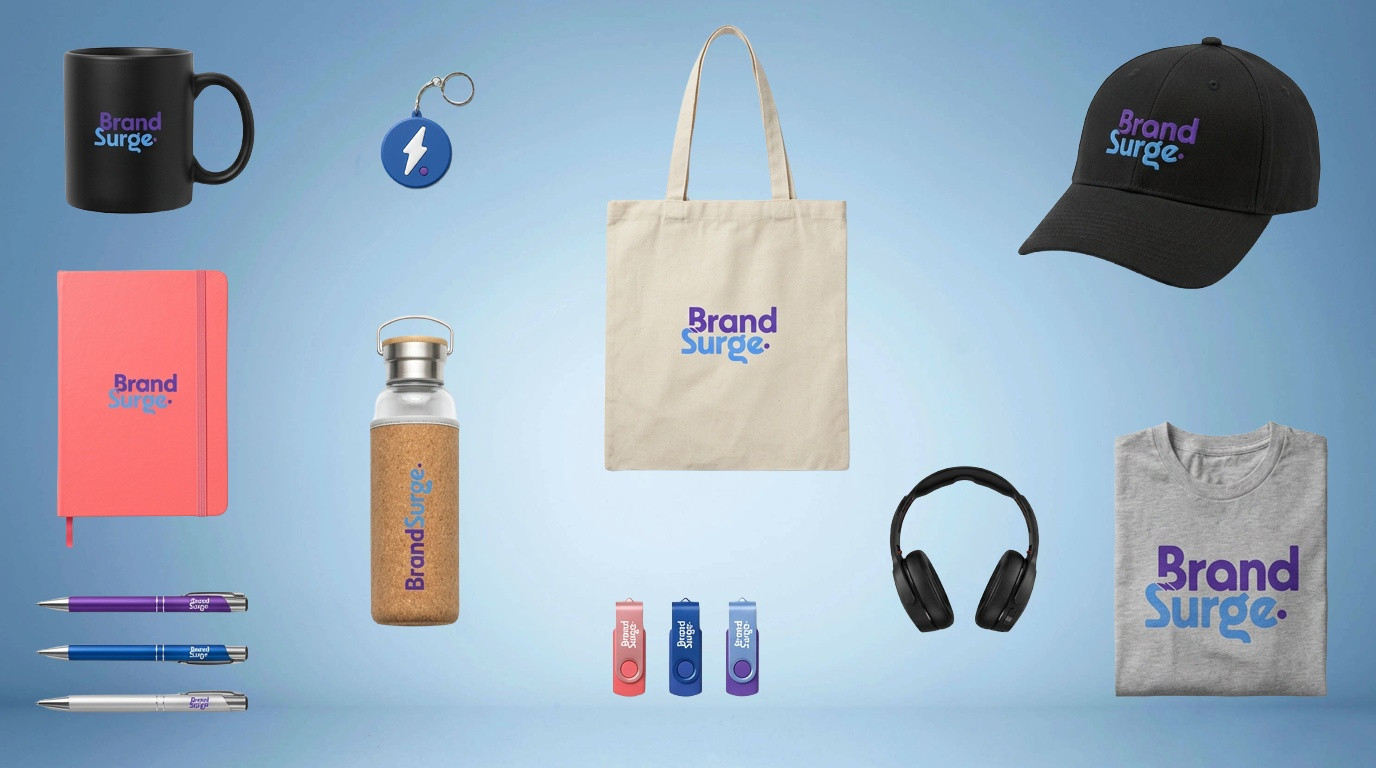
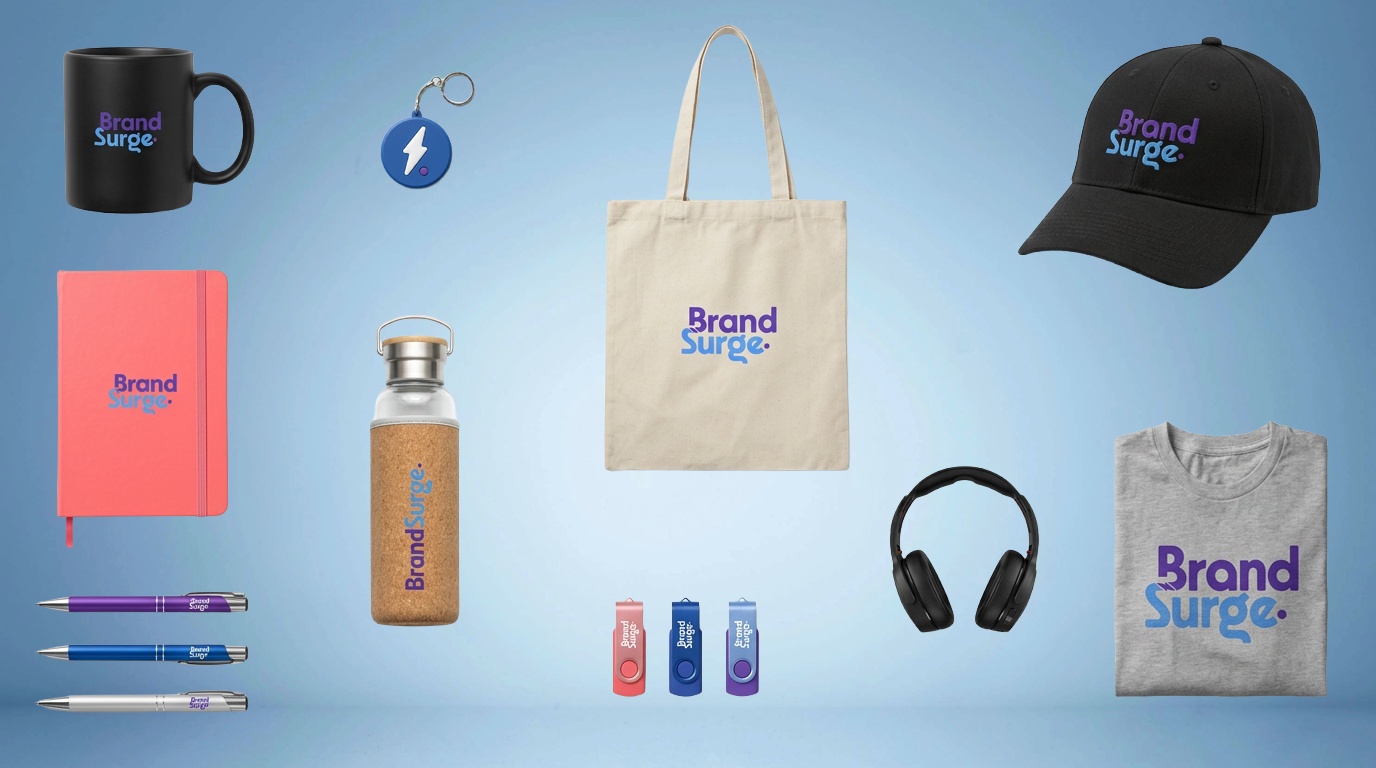
The best promotional items for a small business are the ones people actually use. Not the cheapest, not the most impressive – the ones that end up on a desk, in a gym bag or on branded keyrings instead of in a drawer.
That sounds obvious. It isn't how most businesses buy. And there's good evidence for it: when PPAI asked more than 3,400 consumers why they'd thrown branded merchandise away, 38% said it wasn't useful and only 27% said it was poor quality.
Usefulness beats quality by roughly two and a half to one in determining what gets kept.
So this guide ranks the categories worth your budget, explains who each one suits, and gives you a way to choose.
Best Promotional Items for Small Businesses, Ranked
The categories that earn their place as the most useful small business promotional items are drinkware, tote bags, pens and stationery, apparel and headwear, notebooks, tech accessories, lanyards and keyrings – roughly in that order, though the right one for you depends more on your audience than on any ranking.
Each section below explains why the category earns a spot, and who it works best for. Choosing the right promotional product depends on your audience, use case and budget.
Branded Drinkware: Bottles, Keep Cups and Mugs
Drinkware is the everyday-use category – branded bottles and tumblers get used daily by more people than any other promotional product.
That's the whole case for it. Research from PPAI found 73% of people use branded bottles and tumblers daily, the highest daily-use figure of any category. A bottle that goes to the desk, the gym and the car every day puts your logo in front of the owner and everyone around them, over and over, for as long as they keep it.
The same research found 70% say durable, well-designed drinkware improves how they think about the brand – so this is a category where quality genuinely pays back rather than just costing more.
Who it suits: cafés and hospitality, fitness studios and gyms, offices, and anyone doing corporate gifting where the item needs to feel like a gift rather than a flyer.
Browse the drinkware range, or go straight to reusable coffee cups and keep cups if your audience is a coffee crowd.
Custom Tote Bags
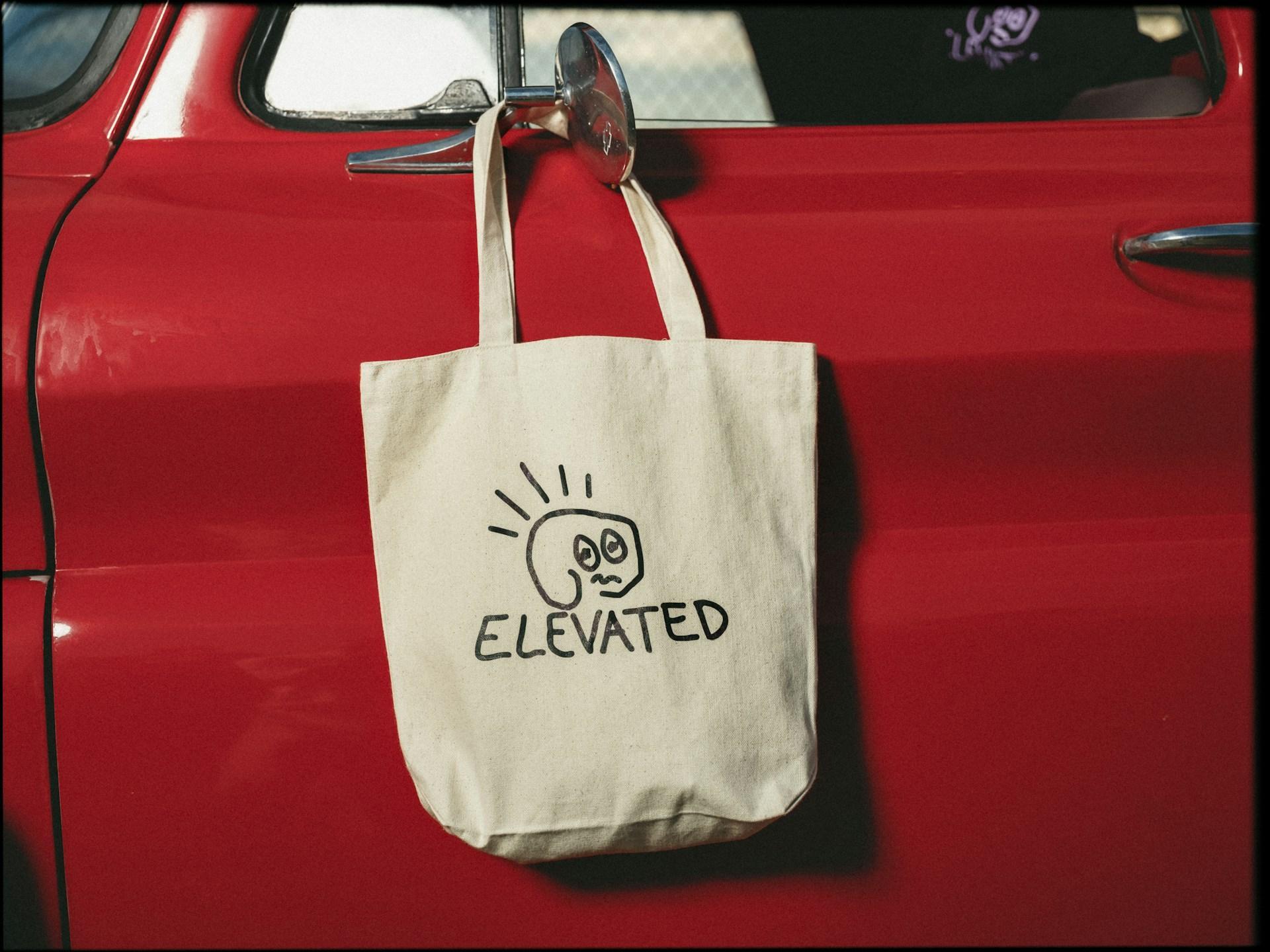
Tote bags are one of the most effective promotional products for brand exposure per dollar, and it isn't close.
The 2026 ASI Global Ad Impressions Study puts bags at around 4,900 impressions over their lifetime at roughly a tenth of a cent per impression – the lowest cost per impression of any category studied. It also found 84% of people keep them for a year or more and 92% use them at least monthly.
Simply, a tote goes to the shops, the beach, the office and the gym, and it's seen by everyone in the queue, which helps build brand awareness through repeated public visibility. It also gives you the largest printable area of any item on this list, so your logo can actually be read from across a room.
Who it suits: retail and e-commerce (they work beautifully as an order insert), market stalls, and any business whose customers carry things.
See the tote bag range or the wider bags collection.
Branded Pens and Stationery
Pens are the cheapest way to get your brand into daily use, and they're one of only two categories that hit a tenth of a cent per impression.
The same ASI research puts pens level with bags on cost per impression, with around 64% of people using a branded pen daily.
They're the easiest item on this list to distribute – a jar on the counter, one in every order, a handful at every event – and the one most likely to get borrowed and never returned, which is a feature rather than a bug.
Pair them with notepads for welcome packs or new-client kits and you have a complete branded set for very little.
Who it suits: professional services, trades, anyone with a physical counter, and anyone doing trade shows where volume matters more than impact.
Browse branded pens or the full office and stationery range.
Branded Apparel and Headwear

Apparel is the most-kept category of all, and outerwear generates more brand impressions than any other promotional item.
PPAI's ranking of the most-kept branded products puts wearables and apparel top at 55%, ahead of bags at 47%. And ASI's 2026 study puts outerwear at around 9,000 lifetime impressions, with t-shirts around 3,500 and caps around 4,000 – all at well under half a cent per impression.
Apparel does a second job that nothing else on this list does: it doubles as a uniform, and it helps your brand stand out because people wear it in public.
A branded polo on your team is a marketing item and a staff cost at the same time, which makes it one of the easiest promotional spends to justify.
One caution. Print and embroidery quality matters more here than anywhere else, because people either wear a branded garment or they don't. A well-made polo gets worn to work for years. A scratchy one gets worn to mow the lawn, if at all.
Who it suits: trades and services, hospitality, fitness, and small business owners with customer-facing teams.
Have a look at clothing and workwear and, separately, the headwear range for caps, beanies and sun hats.
Custom Notebooks and Notepads
Notebooks are the category that goes where your other merchandise can't – into meetings, onboarding kits, corporate gifts, and client gifts.
This one earns its place on use case rather than raw exposure. A branded notebook doesn't generate the impressions a tote does, but it turns up in the rooms where decisions get made, sitting on the table for the length of a meeting with your logo facing everyone in it.
They also carry a premium feel that costs far less than most premium items, which makes them one of the better options for corporate gifts or a new-client welcome pack. And they give you real branding space – a cover, sometimes a band, sometimes the page edges.
Who it suits: professional services, B2B, consultants, and anyone whose customers sit in meetings.
Browse notebooks and journals.
Branded Tech Accessories

Tech is the category to use on a short list of people who matter, not on a crowd – it signals that your business is current, but it doesn't deliver mass exposure.
Worth being straight about this, because a lot of guides overstate it. On the exposure numbers, tech accessories don't compete: ASI's 2026 data puts USB drives at around 400 lifetime impressions, the weakest cost per impression of any category studied.
Power banks do considerably better at around 1,800, but still behind bags, caps, apparel and pens, and low-cost formats like webcam covers sit in the same practical but limited-reach camp.
What tech genuinely does is signal something. PPAI's research found 38% of consumers see branded tech as a marker of a brand being innovative and relevant.
That's a minority, but it's a real effect, and it's one no tote bag will ever give you. When practical tech sits on a desk or laptop, it can also keep your logo visible through the workday.
So use it deliberately. These are promo products that work best for targeted gifting rather than mass handouts.
A power bank or a quality charging cable to a shortlist of key clients does a job. A box of USB drives handed out at a trade show mostly doesn't – and USB drives in particular are a harder sell in 2026 than they were five years ago.
Who it suits: tech, creative and professional audiences, and anyone giving a small number of higher-value gifts.
See the technology and gadgets range, including power banks and USB drives.
Lanyards and Keyrings
These are the always-carried items – small, inexpensive, budget-friendly, and kept for years because they're attached to something people can't leave the house without.
Neither category tops the exposure charts, and it would be misleading to claim otherwise. What they have is persistence. A keyring stays on a set of keys long after a flyer has gone in the bin, and a lanyard gets worn all day, every day, in any workplace that uses passes, which also makes both easy event giveaways people will actually keep.
The practical versions are the ones worth buying. A keyring with a bottle opener, a card holder or a torch built in gets kept because it does something, which is why they also work well as promotional gifts when usefulness matters more than impact.
Who it suits: events and conferences, trades, service businesses, and anywhere staff or visitors need identification.
Eco-Friendly Promotional Products
Eco-friendly isn't a separate product category – it's a material choice you make within the categories above.
That's the useful way to think about it. You don't choose between a tote bag and an eco product; you choose between a standard tote and a recycled one, a plastic bottle and a stainless one, a standard notebook and one with an FSC-certified cover. In practice, that means turning reusable products like bottles and bags into everyday essentials instead of throwaway extras.
It matters to Australian buyers. APPA's 2025-26 research found 55.8% of Australian and New Zealand business buyers rate sustainability as important or extremely important when purchasing promotional products.
That's one reason reusable water bottles, recycled totes and notebooks are among the strongest eco-friendly options.
And the effect is strongest exactly where you'd want it. ASI's 2026 research found 86% of people view the advertiser more favourably when a promotional bag is sustainable, and 87% when it's responsibly produced – the highest figures across every product category they studied.
One honest note: there's no research showing eco items get kept longer than their standard equivalents. What the evidence supports is that choosing them improves how people think of your brand, which is a good enough reason on its own.
Who it suits: any business whose customers care about it – and increasingly, any business tendering to councils, government or larger organisations with procurement standards. They can also work well as promotional material when sustainability is part of the brand message.
Browse the eco range.
Cheap Promotional Items That Still Work for Small Businesses
The best value per dollar comes from pens and tote bags – both land at around a tenth of a cent per impression, which is one of the simplest ways to maximise each marketing dollar through the cheapest advertising most small businesses will ever buy.
If budget is the constraint, these are the categories to look at:
- Pens – the lowest unit cost on this list, used daily, easy to distribute in volume
- Keyrings – inexpensive and carried for years
- Notepads – cheap, genuinely used, and they pair with pens for a set that feels more considered than it costs
- Tote bags – the outlier, because they're inexpensive and top the exposure charts
Even low-cost branded items can build brand recognition when people use them often.
There's a real trade-off to understand here, though. Ultra-cheap items win on volume; mid-range items win on perceived value. A jar of pens on your counter reaches hundreds of people for very little. A quality drink bottle reaches one person, but that person uses it every day for years and thinks better of you for it.
Neither is wrong. They're doing different jobs, and the mistake is buying one when you needed the other. If you're trying to increase brand awareness among strangers, go cheap and go wide. If you're thanking a client who already knows you, don't hand them the same pen you give away at the counter.
What "cheap" shouldn't mean is flimsy. The PPAI research at the top of this article found 66% of people would rather receive fewer, better items than more, cheaper ones. Low cost per unit is fine. Low quality is what gets binned.
How to Choose the Right Promotional Item for Your Business

Run any product past four questions as a simple selection process before you order – and if it fails the first one, none of the others matters.
1. Will your target audience actually use it?
This is the test that decides everything. Not "is it nice" or "would I like one", but will this specific person use this specific thing in their ordinary week. Nearly four in ten discarded items get binned simply for not being useful.
2. Does the quality reflect how you want to be seen?
Your merchandise is a physical sample of your standards. A custom promotional purchase should reflect the business properly, not undermine it. A premium consultancy handing out a pen that stops writing has told its client something. Match the tier to the promise you make everywhere else.
3. Is your logo readable on that surface?
A detailed logo doesn't survive a small curved pen barrel. A pale colour disappears on a light bag. Ask what the branding will actually look like on that item before you commit, not after.
4. Does it fit the campaign?
A trade show giveaway, a client thank-you and a staff uniform are three different purchases. Unlike digital ads, physical products need to suit the campaign goal and setting because they are kept, used and judged over time. Buying one item to do all three usually means it does none of them well.
Matching categories to your type of business
There's no research that maps product categories to industries – anyone quoting you a percentage here is guessing. But the logic follows from what each category does well, and choosing effective promotional products starts with how closely the item matches the way that business operates:
- Retail and e-commerce – tote bags and drink bottles. Both travel, both get seen in public, and a tote doubles as packaging while helping put the brand in front of new customers beyond the first purchase.
- Cafés and hospitality – reusable keep cups. High frequency of contact means the daily-use advantage compounds faster here than anywhere else.
- Trades and services – keyrings, workwear and pens. Practical items for practical customers, and branded workwear pays for itself twice.
- Professional services and B2B – notebooks, quality pens and tech accessories. Items that belong in a meeting room.
- Fitness – drink bottles and apparel. Both get used during the activity your business is about, in front of other potential customers.
Why Promotional Products Work for Small Businesses

Because a branded item someone keeps is advertising you pay for once and benefit from for years, and the best branded items keep working long after they're handed out.
That's the mechanism, and it's what makes promotional products behave so differently from paid advertising. A social ad disappears when the budget stops. A drink bottle on someone's desk is still working eighteen months later, in front of everyone who walks past it.
For a small business, that matters more than it does for a large one, because you're usually trying to become familiar rather than famous.
Repeated small exposures to the same people build recognition and customer loyalty, and over time they can create a lasting impression that makes someone pick you over the competitor they've never heard of.
The Australian evidence is reasonable, if modest.
APPA surveyed 399 Australian and New Zealand recipients of promotional products and found 81% could recall the brand on merchandise they'd received, 77% went on to purchase from that brand, and 84% told someone else about it.
APPA is an industry association, and the sample is small, so treat it as directional – but it's current, and it's Australian, which is more than most figures in this space can claim, including some support for the idea that useful merchandise can help turn buyers into loyal customers over time.
Worth knowing generally: nearly every statistic about promotional product performance comes from an industry body. There's no independent academic or government research on it. The comparisons between categories are more reliable than the absolute numbers, since any optimism should apply evenly across them.
FAQs
Pens, keyrings, notepads and tote bags give you the most brand exposure per dollar, and they work well as everyday items because people use them often. Pens and totes are the standouts – both work out at roughly a tenth of a cent per impression, making them among the cheapest advertising available.
Everyday-use items. Branded drink bottles, tumblers, and coffee mugs are used daily by 73% of recipients, more than any other category, and apparel and bags are the two most-kept categories overall.
These are the products that stay in circulation for months or years rather than being used once, helping keep your brand top of mind through repeated use.
Match the quantity to the campaign rather than picking a round number – event headcount plus a buffer, one per order for inserts, or staff numbers plus spares for uniforms. Unit cost generally drops as quantity rises, so it's worth checking what the next price break looks like. Ask for a quote with your numbers and we'll work it out with you.
Yes, where your customers care about it – and 55.8% of Australian and New Zealand business buyers rate sustainability as important or extremely important, which can also help promote a sustainability message.
The perception benefit is strongest on bags, where 86% of people view the advertiser more favourably when the product is sustainable, especially when they work as everyday essentials people keep using.
Practical items that are easy to hand out and easy to carry home: lanyards, pens, tote bags and keyrings. A tote is particularly useful because attendees use it to carry everything else they collect.
Ready to Choose the Right Promotional Products?
Have a look through the full promotional products range to see what's available across a wider range of branded products in every category above, or get in touch for a quote if you'd rather talk through what suits your business.
Brand Surge is an Australian owned company and a member of the Australasian Promotional Products Association, handling sourcing, free digital mockups, and Australia-wide delivery with no setup fees, and the team can help with both small runs and bulk orders so you can check your branding before anything prints.
Looking for inspo?
Our blog shares practical tips and real examples to help you choose merch people actually keep.
23rd Sep 2026
Best Promotional Items for Trade Shows That Generate Leads
Read more about Best Promotional Items for Trade Shows That Generate Leads
23rd Sep 2026
Corporate Christmas Gift Ideas for Clients and Staff
Read more about Corporate Christmas Gift Ideas for Clients and Staff
12th Aug 2026